Standing Seam Metal Roofing in Augusta, GA
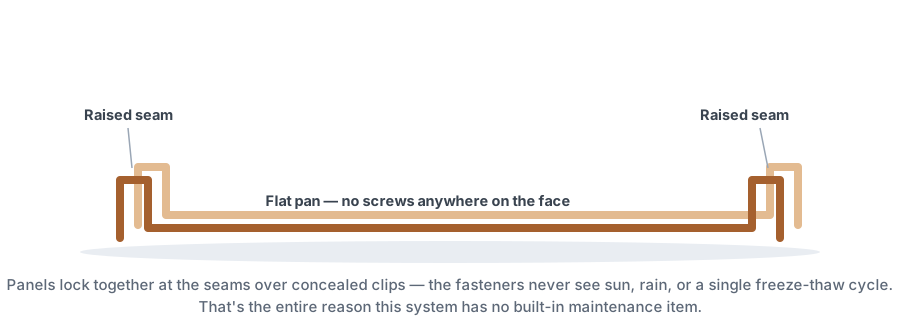
Standing seam is the premium tier of residential metal roofing: panels that lock together with raised seams and attach with concealed clips — no screws through the panel face, ever. We recommend it for most CSRA primary residences, and yes, it costs more up front — typically half again the price of a 5V roof. What that premium buys is the reputation this system has earned plainly: “the last roof you’ll buy.”
Why concealed fasteners matter in our climate
Every exposed-fastener roof relies on hundreds of gasketed screws, and every gasket spends its life baking in Georgia sun and swelling through humid summers. They're serviceable — that's the honest trade 5V owners accept — but they're also the system's eventual maintenance item. Standing seam removes the failure mode entirely: the fasteners live under the panels, out of the weather, and the clips allow each panel to expand and contract through our 95° Julys and freeze-line Januaries without working anything loose.
Snap-lock vs. mechanical seam
| Snap-lock | Mechanical seam | |
|---|---|---|
| How it joins | Panels snap together over clips | Seams machine-folded shut on the roof |
| Best for | Most CSRA homes, 3/12 pitch and up | Low-slope sections (down to ~1/2:12), commercial |
| Cost | Premium | Highest — more labor |
| Weather seal | Excellent on adequate pitch | The tightest seam there is |
Most Augusta-area homes are well served by snap-lock; mechanical seam earns its extra cost on low-slope porch roofs, transitions, and commercial work.
What we spec and why
- 24 or 26-gauge steel. Thicker panels resist oil-canning (the visible waviness on flat panel faces) and take hail and limb strikes better. Bargain quotes often hide 29-gauge.
- PVDF (Kynar-type) finish. The paint system that holds color in full Southern sun. Economy polyester finishes chalk and fade years sooner — visibly, on a roof this prominent.
- Striations or ribs on wide panels. A small profile choice that greatly reduces oil-canning on Augusta's wide, sun-exposed roof planes.
- Synthetic underlayment, detailed flashing. The seam is rarely where a metal roof leaks — chimneys, valleys, and penetrations are. Detail work is the job.
What the warranty fine print really gives you
A nuance the brochures skip: the famous "weathertight warranties" on standing seam — where the manufacturer guarantees the system won't leak — are commercial-only in today's market. On a house, your protection stack is three separate documents. Ask for all three in writing:
- Substrate warranty on the steel — typically 15–25 years against perforation.
- Paint warranty — PVDF finishes hold color 20–30+ years in hot-sun markets; make the quote say PVDF.
- Workmanship warranty from the installer — the one that covers the flashing details that actually decide leaks.
And the trade-off nobody mentions: repairability. Interlocked panels mean replacing one damaged panel is real surgery — mechanically seamed roofs literally get un-seamed. A fair price for a system whose fasteners never see the sun; just a price you should know about.
It's also why roofers, asked what they'd put on their own homes, answer standing seam with one voice — and why you should vet any contractor's actual standing seam portfolio, ours included. The skill pool is genuinely smaller; careful seam and flashing craft is the whole game.
What standing seam costs here
In the Augusta market, standing seam typically runs ~$12–$18+ per square foot installed — roughly half again the cost of a quality 5V roof, and two to three times architectural shingles up front. Whether that premium makes sense depends on the house and your horizon: on a home you're keeping, the no-maintenance fastening system and 50+ year service life usually justify it. On a barn or a budget re-roof, 5V crimp is the smarter spend. Full numbers and what moves them: the Augusta cost guide.
Pricing a standing seam roof?
Free measured estimate, panel and finish options explained straight, anywhere in the CSRA.
Call (706) 222-3651 Request an EstimateStanding seam questions
Will the panels look wavy? (What's oil-canning?)
Oil-canning is the slight rippling visible on flat metal faces in raking light — cosmetic, not a defect, but worth minimizing on a prominent roof. Thicker gauge, narrower panels, and striated profiles all reduce it dramatically; we spec for it up front rather than explain it after.
Can standing seam go over my existing shingles?
Often yes, over a single layer with the right underlayment or furring — same rules as any metal-over-shingle install. Here's how that works.
How long does standing seam actually last?
The steel substrate is typically warrantied for decades and the PVDF finish for 30–40 years; correctly installed systems are regularly serviced past 50. The honest answer: with sound flashing details, it outlasts the questioner.
Does it work on low-slope roofs?
Snap-lock wants roughly 3/12 pitch or better. Below that, mechanical-seam panels are the right call — they're folded shut and handle slow-draining roofs that would defeat snap-lock or screw-down panels.
Can solar panels mount on standing seam?
Better than on any other roof: clamps grip the seams directly with zero roof penetrations. If solar is anywhere in your plans, standing seam is the roof to put under it.