Metal Roof Over Shingles in Augusta: When It Works, When It Doesn't
One of the best cost-savers in metal roofing is also one of the most misunderstood: in many cases, metal panels can be installed directly over a single layer of existing shingles — no tear-off, no dumpster, no exposed house mid-job. Done right, it's a fully code-compliant roof. Done wrong, it traps problems under shiny new metal. Here's the honest version.
What "done right" looks like
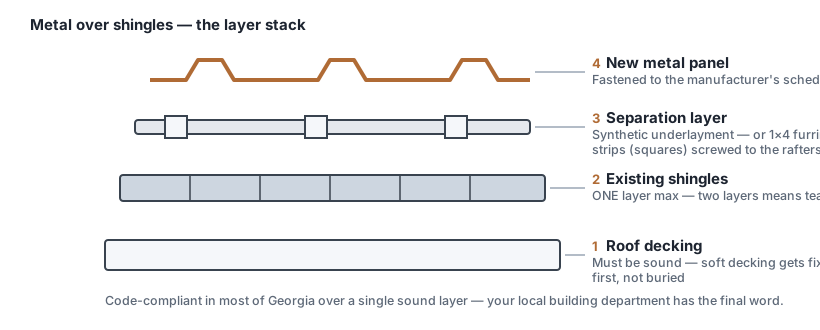
- One existing layer, sound decking. We walk the roof and check the attic first. Spongy decking, active leaks, or two shingle layers already up there mean tear-off is the real answer.
- A separation layer. Either a synthetic underlayment over the shingles or 1x4 furring strips screwed through to the rafters — keeping the metal off the asphalt (shingle granules abrade panel backs as they expand and contract) and giving fasteners solid bite.
- Permit and code check. Georgia follows the International Residential Code, which generally permits roof-overs on a single layer — but the local building department (Richmond, Columbia, or your county) has the final word, and we confirm before quoting it, not after.
- Honest flashing work. Going over shingles doesn't skip the detail work — chimneys, valleys, and edges still get new metal flashing. That's non-negotiable.
What it saves
| Tear-off cost you avoid | Typical impact |
|---|---|
| Tear-off labor | Often $1–$2 per square foot off the project total — $1,800–$3,600 on a typical 1,800 sq ft roof — plus a faster, cleaner job site |
| Disposal / dumpster fees | |
| Days of exposed decking (weather risk mid-job) |
There's a quieter benefit too: the old shingle layer adds a little thermal mass and sound damping under the new metal. See where this fits in total project pricing in the Augusta cost guide.
When we'll tell you no
- Two layers already up. Code's done the deciding — tear-off.
- Soft or rotten decking. Covering it buries a structural problem you'll meet again — with interest.
- Active leaks or wavy, curled shingles. Heavily distorted shingles telegraph through thin panels installed without furring; chronic leaks need the decking inspected, period.
- You want the longest possible system life. For a premium standing seam install on a forever home, starting from clean decking is worth the tear-off.
Find out if your roof qualifies
Free on-site check of your layers, decking, and attic — and a straight answer either way.
Call (706) 222-3651 Request an EstimateRoof-over questions
Is a metal roof over shingles up to code in Georgia?
Generally yes over a single existing layer — Georgia's residential code permits one roof-over when the structure and decking are sound. The local building department issues the permit and has final say, which is why we verify your jurisdiction's reading before we quote the job that way.
Will the old shingles make my house hotter?
No — the opposite, slightly. The old layer adds separation between metal and decking, and a reflective panel finish handles the solar load. Attic ventilation matters more to summer temperatures than the buried shingle layer ever will.
Underlayment or furring strips — which is better?
Both work when matched to the panel system, and good installers genuinely split on when strapping is mandatory. Where everyone agrees is the physics: metal is vapor-tight, so an assembly that can trap moisture needs a way to dry. Our CSRA default reflects our humidity: furring strips (a vented air gap, rafter-deep screw bite, and bridging of minor shingle waviness) on enclosed living spaces, underlayment-only when the existing roof is flat, single-layer, and the attic ventilation is genuinely sound. Climate-blind habits are how roof-overs get bad reputations.
Does going over shingles void the panel warranty?
Not when the manufacturer's installation requirements (separation layer, fastening schedule) are followed — that's standard practice. What voids warranties is improper fastening, regardless of what's underneath. Get the spec sheet with your quote.
Can you do this on my barn or shop too?
Often, yes — ag buildings with old metal or shingle roofs frequently take new panels over purlins or furring. More on farm and ag roofing here.