Every Metal Roof Type Compared: Costs, Lifespans, and What Owners Actually Say
There are eight meaningfully different ways to put metal on a roof, and every brochure claims its way is best. Here's the straight comparison: honest prices, real maintenance schedules, the warranty fine print — and our plain opinion on when a system (or a plain shingle) beats what we sell.
- Most homes: standing seam ($10–18/sq ft) — concealed fasteners, no built-in maintenance item, 40–70 years.
- Farmhouses, barns & budgets: 5V or R-panel ($7–12) — same steel, exposed screws that want a check around year 10–15.
- Need shingle or tile looks: metal shingles or stone-coated steel ($10–18).
- Offered bargain 29-gauge screw-down? Honestly: buy good shingles instead.
The whole field in one table
| System | Installed cost* | Realistic lifespan | Maintenance | Best fit | Watch out for |
|---|---|---|---|---|---|
| Standing seam — snap-lock | $10–$18/sq ft | 40–70 yrs | Minimal; pro check every few years | Homes, new builds, solar-ready | Needs ≥3/12 pitch; fewer qualified installers |
| Standing seam — mechanical seam | $12–$20+/sq ft | 40–70 yrs | Minimal | Low slopes (to ~½/12), commercial | Most labor-intensive; hardest to repair panel-by-panel |
| 5V crimp | $7–$12/sq ft | 40+ yrs with screw service | Fastener check ~yr 10–15, then periodic | Farmhouses, classic Southern look | Gaskets age in sun; needs ≥3/12 pitch |
| R-panel / PBR | $7–$12/sq ft | 40+ yrs with screw service | Same as 5V + foam closures degrade | Barns, shops, ag, commercial | Same fastener story; 36" panels telegraph waviness |
| Corrugated / tuff-rib | $6–$10/sq ft | 30–50 yrs, install-dependent | Fastener checks | Sheds, outbuildings, budget projects | Often 29-gauge bargain spec — the weak point |
| Metal shingles / stamped | $10–$16/sq ft | 40–60 yrs | Low | HOA looks, shingle-profile neighborhoods | Often thinner gauge than the price suggests |
| Stone-coated steel | $10–$18/sq ft | 40–60 yrs | Low; granule loss over decades | Tile/shake look without the weight | Repairs need matching batches; walk carefully |
| Aluminum / copper / zinc | $12–$40+/sq ft | 50–100+ yrs | Minimal | Coastal (aluminum); legacy homes (copper/zinc) | Cost; copper/zinc need specialty installers |
*2026 ranges synthesized from national supplier price guides and contractor data; Augusta-area numbers in our local cost guide. Complex roofs exceed every range here — intricate standing seam jobs can run $25/sq ft and beyond.
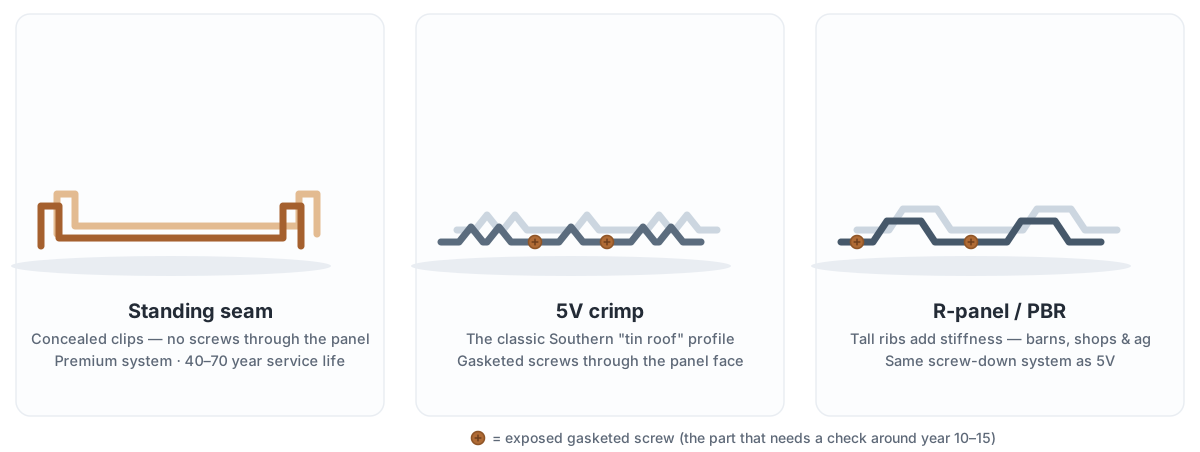
The exposed-fastener family — what a decade of ownership sounds like
5V crimp, R-panel, and corrugated roofs all share one design fact: thousands of gasketed screws through the panel face, each one a small rubber washer spending its life in the sun. Everything good and bad about these roofs flows from that.
One more fine-print fact most buyers never hear: no manufacturer we know of offers a weathertight warranty on any exposed-fastener system. The industry itself prices in the penetrations. You get material warranties on the steel and paint — the watertightness is on the installer's workmanship and your maintenance.
Full local detail: our 5V & farm roofing page.
Standing seam — why the trades pick it for their own houses
Ask any roofer what they'd put on their own house and the answer is lopsided: standing seam, because the fasteners are concealed clips that never see sunlight, and because the clip system lets panels float through thermal expansion instead of fighting their own screws. It's the only residential metal system with essentially no built-in maintenance item.
The honest costs of that superiority:
- Price: roughly half again the cost of 5V.
- Skill pool: genuinely smaller — vet a contractor's actual standing seam portfolio, not their claim.
- Repairs are surgery: interlocked panels mean replacing one is real work; mechanically seamed roofs literally get un-seamed.
- Warranty nuance the brochures skip: "weathertight warranties" are commercial-only. On a house your protection is substrate + paint + workmanship warranties — get all three in writing.
Pitch rules of thumb from manufacturer specs: snap-lock wants 3/12 or steeper; mechanically seamed handles low slopes down to about ½/12. And if solar is in your future, standing seam is the answer key: panels clamp to the seams with zero roof penetrations.
Full local detail: our standing seam page.
Metal shingles & stone-coated steel — the camouflage option
If you want metal's lifespan but your street (or HOA) expects shingle, shake, or tile profiles, stamped metal shingles and stone-coated steel exist for exactly you. Both hide their fasteners, both shed hail and fire well, and both surprise buyers on price: despite often using thinner-gauge steel than standing seam, they can cost as much or more — the stamping and accessory systems are where the money goes.
Owner opinion splits on looks, honestly: fans say stone-coated reads as tile from the street; detractors say up close it reads as neither tile nor metal. Two practical notes from installer commentary: granule shedding on stone-coated is slow but real over decades, and repairs want panels from a matching production batch — worth keeping spares from your install. We don't push these systems in the CSRA — the local look skews 5V-and-standing-seam — but we'll quote them when the house calls for it.
Beyond steel — aluminum, copper, zinc
Painted Galvalume steel is the default for good reason: best strength-per-dollar. The exceptions worth knowing: aluminum earns its premium within salt air — a non-issue 130 miles inland in Augusta, decisive at the coast. Copper and zinc are century roofs that develop living patinas and cost like sculpture ($25–$40+/sq ft installed); they belong on legacy architecture with specialty crews. For everything else in east Georgia: quality-gauge Galvalume with the right paint system wins the math.
What the suppliers' fine print actually says
- Paint warranties are written in lawyer, not English. SMP (economy) and PVDF/Kynar (premium) finishes can both carry "35-year" fade-and-chalk warranties — but the warranty allows different amounts of fade before it triggers. Real-world supplier guidance from hot-sun markets: PVDF commonly holds color 20–30+ years; SMP visibly chalks and fades years sooner. Same warranty length, different roof at year 15.
- Galvalume substrate warranties run ~15–25 years against rupture/perforation — and the exclusions matter: corrosive environments including animal-confinement buildings (manure ammonia), coastal salt, cement dust, and chemical exposure are typically excluded. If you're roofing an enclosed livestock barn, ventilation design and panel choice need a real conversation, not a brochure. (Open-air ag buildings are generally fine.)
- Gauge is the quiet substitution. "Metal roof" on a quote can legally mean 29-gauge economy panel with polyester paint. 26-gauge with PVDF is a different product at a different price. We install roofs — we don't sell panels — but what gets installed is decided on the quote, so make every installer's quote spell out gauge and paint system in writing. Ours does.
Reasons Not to Choose Metal
Honest comparison means including the argument against us. A vocal contingent of roofing professionals argues that architectural shingles beat cheap exposed-fastener metal on a house — their reasoning: a bargain 29-gauge screw-down roof installed by a low bidder develops fastener and flashing problems that a boring $4.50/sq ft shingle roof simply doesn't have during its quiet 15–20 year life. We think they're right about the bargain version — that's why we won't spec it on a home. The fair fight is quality 26-gauge metal or standing seam vs. shingles, and there metal wins on lifespan, storm rating, cooling load, and total cost of ownership for anyone staying past a decade.
Three situations where we'd point you elsewhere:
- Flat roofs — no metal panel system belongs there.
- Selling soon — you won't see dollar-for-dollar back at the closing table. A metal roof makes the home more attractive, especially to an educated buyer, and a real-estate agent worth their salt will sell that feature hard — just don't bank on a higher price because you installed it. The real dividends pay whoever stays under it.
- A lowest-bidder budget — if it only stretches to the thinnest panel, buy good shingles instead. Yes, a metal roofing company just told you that.
Want this comparison run on your actual roof?
Free on-site estimate in Augusta and the CSRA — we'll price the 2–3 systems that genuinely fit your building and tell you which we'd pick and why.
Call (706) 222-3651 Request an EstimateQuick answers
Which metal roof type lasts the longest?
Among steel systems, standing seam — 40–70 years, because nothing penetrates the panels and the clips absorb thermal movement. Copper and zinc outlast everything (a century is normal) at several times the cost. Exposed-fastener steel reaches 40+ years with its fastener service; neglected, the gaskets set its lifespan instead.
Which metal roof is cheapest?
Corrugated and ribbed exposed-fastener panels ($6–$10/sq ft installed), then 5V and R-panel ($7–$12). The caution: the cheapest versions get there with 29-gauge steel and economy paint — the combination behind nearly every "metal roof gone bad" story you'll ever hear.
What do owners complain about most across all types?
Ask owners and you'll hear the same three: screws backing out on exposed-fastener systems (by far #1), visible waviness (oil canning) on wide flat panels, and color fade on economy paint. Distant honorable mentions: sheet-snow slides in northern climates and slightly weaker cell/radio signal indoors — real but minor. Notice what's absent: rain noise, the thing everyone asks about first.
Are metal roofs worth it for resale value?
Don't bank on dollar-for-dollar at the closing table — studies put immediate cost recoup around 60–86%. What a metal roof does do is make the listing more attractive: educated buyers know what it's worth, and a good agent will sell the feature hard. The full dividends — lifespan, storm rating, cooling savings — pay whoever stays under it.
What percentage of new roofs are metal now?
Metal has grown to roughly a sixth of U.S. residential roofing and climbing — industry analyses credit insurance pressure after hail and wind events, energy codes, and homeowners aging out of their second shingle roof. It's the fastest-growing residential roofing category of the 2020s.